


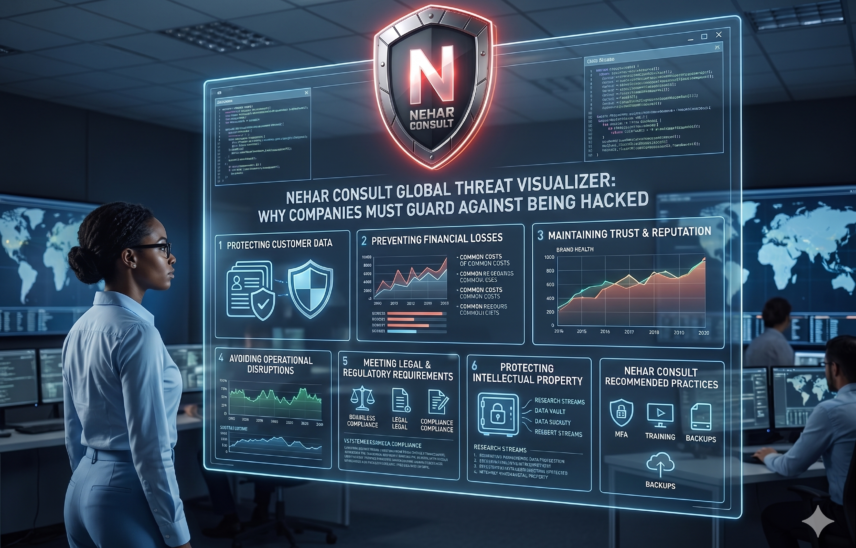
In today’s hyper-connected digital landscape, cybersecurity is no longer a secondary IT concern—it is a fundamental business requirement. Organizations of every size and across every industry are increasingly targeted by cybercriminals seeking financial gain, valuable data, or operational disruption. As reliance on cloud computing, remote work, and digital platforms grows, the risks associated with cyber threats continue to escalate.
Failing to prioritize cybersecurity can expose businesses to severe financial losses, reputational damage, and legal consequences. To remain resilient and competitive, companies must actively defend themselves against cyberattacks.
One of the most critical responsibilities of any organization is safeguarding customer information. Businesses routinely collect and store sensitive data such as names, addresses, login credentials, payment details, and personal records. If this data is compromised, customers may face identity theft, fraud, and other serious risks.
Beyond the direct harm to customers, a data breach can permanently damage the trust that individuals place in a company. Once trust is lost, rebuilding it can be difficult and costly.
Cyberattacks can impose significant financial burdens on organizations. The costs extend far beyond the initial breach and often include:
For small and medium-sized businesses, these costs can be particularly devastating, sometimes even threatening the organization’s survival.
A company’s reputation is one of its most valuable assets. Customers expect businesses to handle their data responsibly and operate securely. When a cyber incident occurs, news can spread rapidly, eroding public confidence.
Reputational damage often leads to decreased customer loyalty, reduced sales, and strained relationships with partners and stakeholders. In a competitive marketplace, even a single breach can have long-term consequences.
Cyberattacks frequently target essential business systems. A successful breach can disrupt websites, email platforms, payment systems, and internal applications. These interruptions can halt daily operations and reduce employee productivity.
In critical sectors such as healthcare, banking, logistics, and telecommunications, even brief downtime can result in serious financial and societal impacts.
Governments and regulatory bodies worldwide have introduced strict data protection and cybersecurity laws. Organizations are required to implement appropriate safeguards to protect both personal and corporate data.
Failure to comply can result in:
Compliance is no longer optional—it is a core requirement for doing business in many industries.
Cybercriminals are not only interested in customer data. Many attacks aim to steal valuable business information, including:
The loss of intellectual property can weaken a company’s competitive advantage and hinder long-term growth and innovation.
Ransomware remains one of the most damaging forms of cyberattack. In these incidents, attackers encrypt an organization’s data and demand payment for its release.
Victims may be forced to suspend operations while attempting to recover systems. Even if a ransom is paid, there is no guarantee that access will be restored or that stolen data will not be leaked. This makes ransomware both a financial and operational threat.
Cybersecurity extends beyond a single organization. A breach can affect vendors, suppliers, partners, and customers connected to the company’s systems.
Employees are often the first line of defense—and the most common target. Phishing attacks and social engineering tactics frequently exploit human error. Educating staff and building awareness is essential for reducing risk across the entire business ecosystem.
Cybersecurity plays a critical role in business continuity planning. Organizations that implement strong security frameworks—such as regular backups, system monitoring, and incident response plans—are better equipped to manage and recover from cyber incidents.
Prepared companies can restore operations more quickly and minimize damage, ensuring long-term resilience.
To effectively reduce cyber risks, businesses should adopt a proactive security approach that includes:
Implementing these measures significantly strengthens an organization’s security posture.
Cyber threats are constantly evolving, and no organization is immune. Whether large or small, every business must take cybersecurity seriously to protect its operations, customers, financial stability, and reputation.
Investing in cybersecurity is not just about preventing attacks—it is about building resilience, maintaining trust, and ensuring long-term success in an increasingly digital world. Organizations that prioritize security today are far better positioned to thrive tomorrow.
At Nehar Consult, we empower your employees with hands‑on, real‑world security awareness training that significantly reduces the risk and impact of identity theft. As a result, your workforce becomes a resilient, frontline human firewall—all while staying fully engaged in their day‑to‑day responsibilities. Beyond training, we work closely with your organization to navigate and complete the required cybersecurity frameworks, ensuring full CSAT fulfillment with clarity, confidence, and regulatory readiness.
Security Awareness Training Assessment Tool : Check your eligibility here
Schedule your next appointment here: Book your Appointment
Check how strong your password is with Free Nehar Password Check: Click here
Check what PCI DSS SAQ form is appropriate for your organization with our Free Calculator: Check here