


NEHAR

Securing the Enterprise: The Cyber Defense Checklist

Shape1 Shape2
Securing the Enterprise: The Cyber Defense Checklist

Modern organizations face an evolving threat landscape where attackers increasingly exploit weaknesses in people, processes, and technology. Most successful cyberattacks are not the result of highly advanced techniques, but rather gaps such as weak authentication, unpatched systems, human error, or limited visibility.

To build an effective cybersecurity strategy, organizations must focus on the following critical risk areas:


1. Phishing and Social Engineering

Phishing and social engineering attacks rely on deception to trick employees into revealing sensitive information, approving fraudulent MFA requests, or opening malicious files.

Defensive Measures:

  • Security awareness and phishing simulation training
  • Advanced email filtering and anti-phishing tools
  • Multi-factor authentication (MFA)
  • Verification procedures for financial or sensitive requests
  • Blocking macros and malicious attachments

Common Attack Types:

  • Fake Microsoft 365 login pages
  • Business Email Compromise (BEC)
  • Device code phishing attacks
  • QR code phishing (“quishing”)

2. Weak Passwords and Stolen Credentials

Compromised credentials remain one of the leading causes of data breaches, often due to reuse or inadequate password practices.

Defensive Measures:

  • Enforce MFA across all systems
  • Use password managers
  • Implement strong password policies
  • Apply conditional access controls
  • Monitor for leaked or compromised credentials

3. Unpatched Vulnerabilities

Attackers frequently exploit outdated software, operating systems, and network infrastructure.

Defensive Measures:

  • Regular patch management processes
  • Continuous vulnerability scanning
  • Maintaining an accurate asset inventory
  • Updating third-party applications
  • Prioritizing remediation based on risk

Common Targets:

  • VPN appliances
  • Web servers
  • Browsers
  • Remote access tools

4. Ransomware

Ransomware attacks encrypt critical systems and demand payment for restoration, often disrupting operations.

Defensive Measures:

  • Maintain offline and immutable backups
  • Deploy Endpoint Detection and Response (EDR) solutions
  • Segment networks to limit spread
  • Enforce least privilege access
  • Establish rapid incident response procedures

5. Insider Threats

Insider threats can be intentional or accidental, arising from employees, contractors, or partners.

Defensive Measures:

  • Role-based access control (RBAC)
  • Data Loss Prevention (DLP) solutions
  • Monitoring user activity
  • Structured offboarding processes
  • Privileged Access Management (PAM)

6. Cloud Misconfigurations

Improperly configured cloud environments can expose sensitive data to the public or unauthorized users.

Defensive Measures:

  • Cloud security posture management (CSPM)
  • Secure identity and access configurations
  • Enforce least privilege permissions
  • Continuous monitoring and auditing
  • Encryption for data at rest and in transit

Commonly Targeted Platforms:

  • Microsoft cloud services
  • Amazon Web Services (AWS)
  • Google Cloud Platform (GCP)

7. Supply Chain Attacks

Attackers increasingly target vendors and service providers to gain indirect access to organizations.

Defensive Measures:

  • Vendor security assessments
  • Third-party risk management programs
  • Software integrity verification
  • Network isolation for vendor access
  • Monitoring privileged vendor accounts

8. Poor Access Controls

Overprivileged accounts significantly increase the risk of compromise and lateral movement.

Defensive Measures:

  • Adopt Zero Trust architecture
  • Implement Privileged Access Management (PAM)
  • Enable just-in-time (JIT) access
  • Conduct periodic access reviews

9. Lack of Monitoring and Incident Response

Delayed detection allows attackers to remain undetected in systems for extended periods.

Defensive Measures:

  • Security Information and Event Management (SIEM) systems
  • 24/7 monitoring capabilities
  • Threat detection and correlation rules
  • Well-defined incident response plans
  • Security Operations Center (SOC) support

Common Security Tools:

  • Microsoft Defender
  • CrowdStrike
  • Arctic Wolf
  • Splunk

10. Data Exposure and Compliance Failures

Organizations must safeguard sensitive data to prevent breaches and regulatory penalties.

Defensive Measures:

  • Data classification and labeling
  • Strong encryption practices
  • Reliable backup strategies
  • Compliance frameworks and programs
  • Data retention and governance controls

Key Regulations:

  • GDPR
  • HIPAA
  • PCI-DSS
  • Nigeria Data Protection Act (NDPA)

Essential Security Controls Every Organization Should Implement

To reduce risk effectively, the following controls should be prioritized:

  • MFA across all systems
  • Regularly tested backups
  • Endpoint protection (EDR)
  • Formal patch management processes
  • Ongoing security awareness training
  • Email security solutions
  • Continuous vulnerability scanning
  • Least privilege access enforcement
  • Incident response planning
  • Continuous monitoring and SIEM

Emerging Cybersecurity Threats in 2026

The threat landscape continues to evolve, with several newer attack vectors gaining prominence:

  • AI-powered phishing campaigns
  • OAuth and device code exploitation attacks
  • Deepfake-based fraud (voice and video)
  • Identity-centric attacks
  • Cloud identity compromise
  • Infostealer malware targeting browsers and session tokens

Conclusion

A modern cybersecurity strategy must extend far beyond traditional defenses such as antivirus software and firewalls. Today’s threats are increasingly focused on identity systems, authentication protocols, and access tokens.

Organizations should prioritize:

  • Identity security
  • Continuous monitoring
  • Rapid detection and response

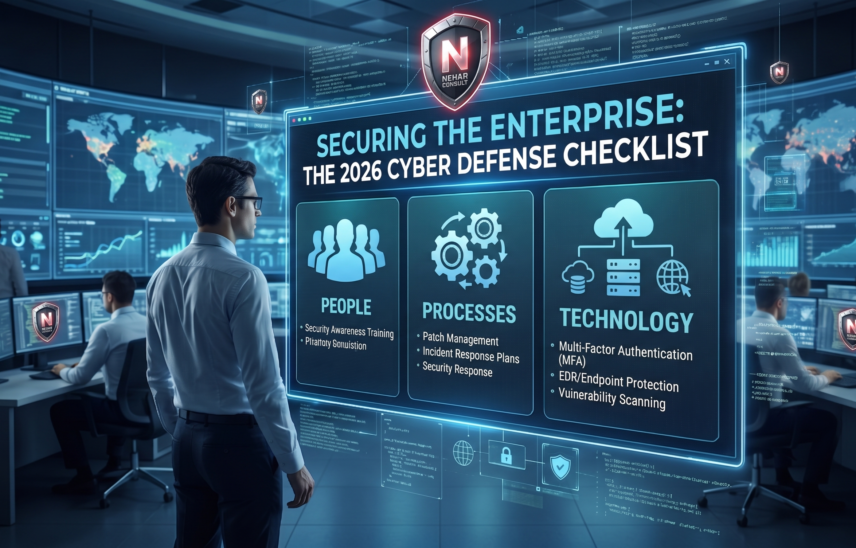
By strengthening controls across people, processes, and technology, organizations can significantly reduce their exposure to today’s most critical cyber risks.


At Nehar Consult, we empower your employees with hands‑on, real‑world security awareness training that significantly reduces the risk and impact of identity theft. As a result, your workforce becomes a resilient, frontline human firewall—all while staying fully engaged in their day‑to‑day responsibilities. Beyond training, we work closely with your organization to navigate and complete the required cybersecurity frameworks, ensuring full CSAT fulfillment with clarity, confidence, and regulatory readiness.

Security Awareness Training Assessment Tool :

Check your eligibility here

Schedule your next appointment here:

Book your Appointment

Check how strong your password is with Free Nehar Password Check:

Click here

Check what PCI DSS SAQ form is appropriate for your organization with our Free Calculator:

Check here