


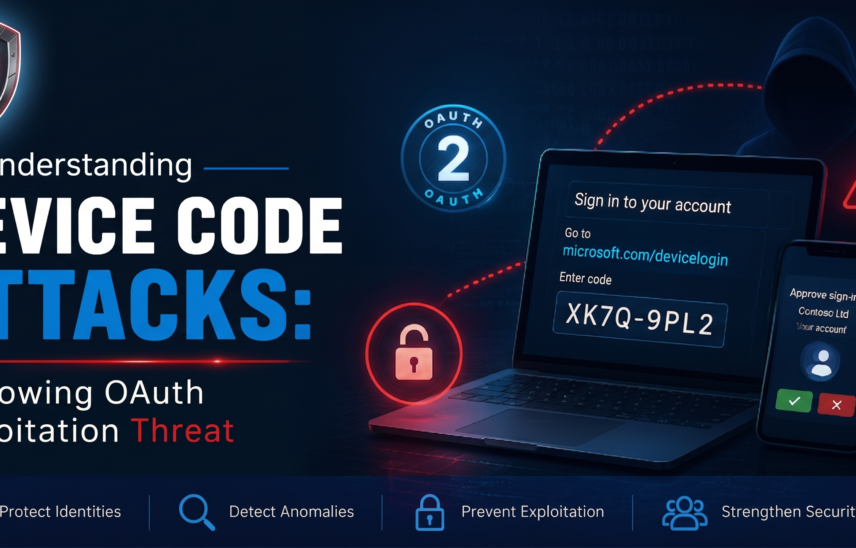
A Device Code Attack is a sophisticated phishing and account takeover technique that exploits the legitimate OAuth device code flow used by platforms such as Microsoft Entra ID (Azure AD), Microsoft 365, and other cloud services.
In recent years, this attack method has gained traction among cybercriminals because it allows them to bypass traditional password theft techniques and, in some cases, evade protections like multi-factor authentication (MFA) fatigue defenses.
The device authorization flow was originally designed to support devices that cannot easily present a standard web-based login experience. These include:
Instead of entering credentials directly on such devices, users authenticate through a secondary, trusted device. The process typically works as follows:
Example:
microsoft.com/deviceloginABCD-EFGHOnce completed, the device is authorized without requiring direct credential entry.
Attackers manipulate this legitimate authentication process by tricking users into entering a device code generated by the attacker.
Although MFA is used, it does not prevent the attack because the victim is authenticating a session initiated by the attacker. No password needs to be stolen afterward.
Victims interact with actual Microsoft URLs, making the experience appear trustworthy and reducing suspicion.
Traditional phishing detection methods often fail because:
Attackers may obtain:
This allows continued access even after initial detection.
Security teams can detect potential attacks by monitoring for unusual activity, including:
Device code attacks have been observed targeting high-value organizations and individuals, including:
Due to their stealth and reliability, these attacks have been leveraged in advanced phishing campaigns, including those linked to nation-state threat actors.
If your organization does not rely on this authentication method, consider disabling it or limiting its use through policy controls.
Apply restrictions to reduce risk, such as:
Regularly review for:
Educate users to:
Use security features such as:
An employee receives a message:
“Your Teams session has expired. Please reauthenticate at microsoft.com/devicelogin using code HJ72-KLMN.”
The employee:
At that moment, the attacker gains access tokens linked to the employee’s account.
Result: The account is compromised—even though no password was stolen.
Device code attacks highlight a critical shift in modern cyber threats: attackers are increasingly targeting authentication workflows and tokens, rather than credentials alone.
To defend against these attacks, organizations must move beyond traditional security approaches and focus on:
In today’s environment, securing authentication flows is just as important as protecting passwords and enforcing MFA.