


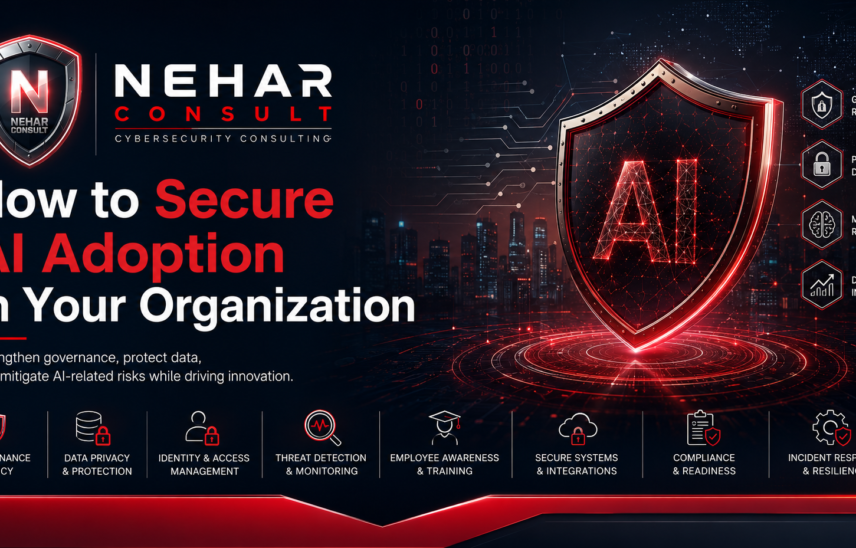
Artificial Intelligence (AI) is no longer a futuristic concept—it is a present-day catalyst reshaping how organizations operate, compete, and innovate. From automating routine processes to enabling predictive analytics and enhancing customer experiences, AI has become a cornerstone of digital transformation. However, as organizations accelerate adoption, many overlook one critical dimension: security.
Unsecured AI deployments can introduce substantial risks, including data leakage, compliance violations, adversarial attacks, and reputational harm. To successfully harness AI while minimizing exposure, organizations must adopt a deliberate, security-first approach that balances innovation with governance and cybersecurity best practices.
A secure AI journey begins with governance. Organizations should define a structured framework that outlines how AI technologies are evaluated, deployed, and managed across the enterprise.
Key elements of an AI governance framework include:
To ensure oversight and cross-functional alignment, organizations should create an AI governance committee composed of IT, cybersecurity, legal, compliance, and business stakeholders. This committee plays a vital role in enforcing policies, monitoring usage, and ensuring that AI initiatives align with organizational goals and regulatory requirements.
AI systems thrive on data—but not all data should be treated equally. Without proper controls, employees may unintentionally expose sensitive or regulated information when interacting with AI tools.
To mitigate this risk, organizations must:
A critical rule: never allow confidential or regulated data to be entered into unapproved or public AI platforms. Establishing clear guardrails protects both organizational assets and customer trust.
Not all AI solutions offer the same level of security and transparency. Selecting the right platform is essential to minimizing risk.
When evaluating AI vendors, consider:
Organizations should prioritize enterprise-grade AI platforms that provide robust security controls, compliance assurances, and clear contractual protections regarding data usage.
AI systems should adhere to the principle of least privilege, ensuring that users only have access to what they truly need.
Core IAM controls include:
By limiting access and enforcing strong authentication, organizations reduce the likelihood of insider threats and unauthorized AI interactions.
Cybercriminals are increasingly leveraging AI to enhance the sophistication and scale of attacks. These include:
To counter these risks, organizations should strengthen:
Continuous monitoring and early detection are critical to defending against evolving AI-enabled threats.
Human error remains one of the leading causes of security incidents. As AI tools become more accessible, employee awareness becomes essential.
Training programs should cover:
Security awareness must evolve alongside AI capabilities to ensure employees can confidently and securely leverage these tools.
AI systems are not immune to attack—they can become targets themselves. From poisoned training datasets to vulnerable APIs, the attack surface expands with AI adoption.
Organizations should secure:
Routine vulnerability assessments and penetration testing should include AI environments to identify and remediate potential weaknesses.
AI adoption often intersects with legal and regulatory frameworks, particularly in industries handling sensitive data.
Organizations must align with:
Engaging legal and compliance teams early ensures that AI implementations meet regulatory obligations and avoid costly penalties.
Despite best efforts, security incidents can still occur. Organizations must be prepared to respond effectively to AI-related threats.
An AI-specific incident response plan should address:
Preparation minimizes disruption, accelerates response times, and helps maintain stakeholder confidence.
AI has the power to transform organizations, driving efficiency, innovation, and competitive advantage. However, these benefits cannot be realized without a strong foundation of security and governance.
Secure AI adoption is not solely the responsibility of IT or cybersecurity teams—it requires a holistic, organization-wide commitment. By implementing robust governance frameworks, protecting data, educating employees, and continuously monitoring risks, organizations can leverage AI with confidence.
Ultimately, the goal is clear: enable innovation while preserving trust, resilience, and accountability in an AI-driven world.
At Nehar Consult, we empower your employees with hands‑on, real‑world security awareness training that significantly reduces the risk and impact of identity theft. As a result, your workforce becomes a resilient, frontline human firewall—all while staying fully engaged in their day‑to‑day responsibilities. Beyond training, we work closely with your organization to navigate and complete the required cybersecurity frameworks, ensuring full CSAT fulfillment with clarity, confidence, and regulatory readiness.
Security Awareness Training Assessment Tool : Check your eligibility here
Schedule your next appointment here: Book your Appointment
Check how strong your password is with Free Nehar Password Check: Click here
Check what PCI DSS SAQ form is appropriate for your organization with our Free Calculator: Check here