


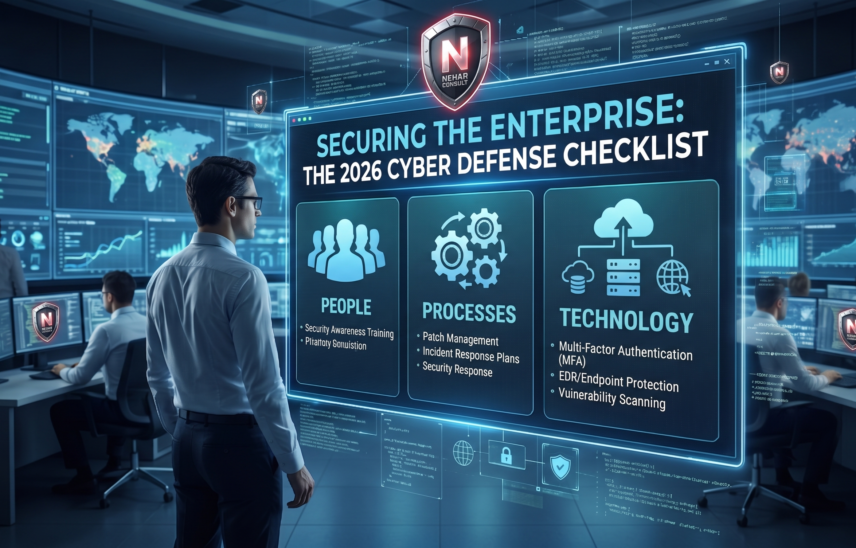
Modern organizations face an evolving threat landscape where attackers increasingly exploit weaknesses in people, processes, and technology. Most successful cyberattacks are not the result of highly advanced techniques, but rather gaps such as weak authentication, unpatched systems, human error, or limited visibility.
To build an effective cybersecurity strategy, organizations must focus on the following critical risk areas:
Phishing and social engineering attacks rely on deception to trick employees into revealing sensitive information, approving fraudulent MFA requests, or opening malicious files.
Defensive Measures:
Common Attack Types:
Compromised credentials remain one of the leading causes of data breaches, often due to reuse or inadequate password practices.
Defensive Measures:
Attackers frequently exploit outdated software, operating systems, and network infrastructure.
Defensive Measures:
Common Targets:
Ransomware attacks encrypt critical systems and demand payment for restoration, often disrupting operations.
Defensive Measures:
Insider threats can be intentional or accidental, arising from employees, contractors, or partners.
Defensive Measures:
Improperly configured cloud environments can expose sensitive data to the public or unauthorized users.
Defensive Measures:
Commonly Targeted Platforms:
Attackers increasingly target vendors and service providers to gain indirect access to organizations.
Defensive Measures:
Overprivileged accounts significantly increase the risk of compromise and lateral movement.
Defensive Measures:
Delayed detection allows attackers to remain undetected in systems for extended periods.
Defensive Measures:
Common Security Tools:
Organizations must safeguard sensitive data to prevent breaches and regulatory penalties.
Defensive Measures:
Key Regulations:
To reduce risk effectively, the following controls should be prioritized:
The threat landscape continues to evolve, with several newer attack vectors gaining prominence:
A modern cybersecurity strategy must extend far beyond traditional defenses such as antivirus software and firewalls. Today’s threats are increasingly focused on identity systems, authentication protocols, and access tokens.
Organizations should prioritize:
By strengthening controls across people, processes, and technology, organizations can significantly reduce their exposure to today’s most critical cyber risks.
At Nehar Consult, we empower your employees with hands‑on, real‑world security awareness training that significantly reduces the risk and impact of identity theft. As a result, your workforce becomes a resilient, frontline human firewall—all while staying fully engaged in their day‑to‑day responsibilities. Beyond training, we work closely with your organization to navigate and complete the required cybersecurity frameworks, ensuring full CSAT fulfillment with clarity, confidence, and regulatory readiness.
Security Awareness Training Assessment Tool :
Schedule your next appointment here:
Check how strong your password is with Free Nehar Password Check:
Check what PCI DSS SAQ form is appropriate for your organization with our Free Calculator: