

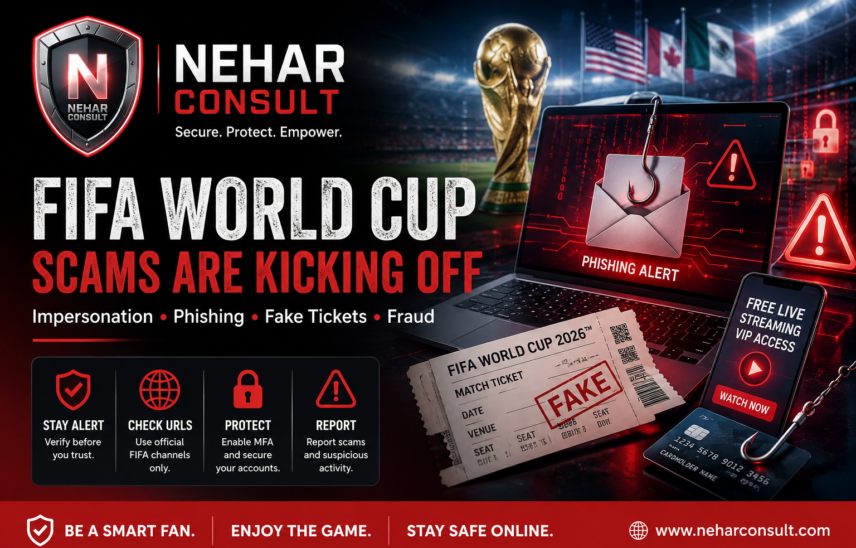
As anticipation grows for the 2026 FIFA World Cup, cybersecurity professionals are warning of a significant rise in scams exploiting the global event. Cybercriminals are increasingly leveraging the tournament’s popularity through impersonation schemes and phishing campaigns, targeting millions of football fans worldwide.
Researchers report a surge in fraudulent FIFA-related activity, including fake ticketing platforms, AI-generated phishing messages, counterfeit merchandise shops, and deceptive travel offers. These tactics are designed to steal money, personal data, and login credentials from unsuspecting victims.
One of the most common threats involves fake websites posing as official FIFA ticket vendors. Investigators have uncovered numerous lookalike domains built to deceive fans searching online for match tickets.
These fraudulent sites often promote:
Victims may pay high prices for fake tickets or unknowingly submit sensitive payment and personal details. Many of these websites appear convincing, using copied branding, polished interfaces, and fabricated customer reviews.
Experts note that high demand and escalating ticket prices have driven many fans toward unofficial sources, increasing exposure to fraud.
Cybercriminals are now using artificial intelligence to create more sophisticated phishing attacks tied to the World Cup. These campaigns include:
Attackers frequently impersonate trusted entities such as FIFA officials, airlines, hotels, travel agencies, sponsors, and ticketing services.
Unlike older phishing attempts, these messages are often well-written and visually polished, making them harder to spot.
Scammers are also targeting users on platforms like Instagram, Facebook, WhatsApp, Telegram, and X. Common tactics include:
Threat actors often create duplicate accounts mimicking FIFA branding or famous players like Lionel Messi and Kylian Mbappé. AI-generated visuals and copied profiles make these accounts appear increasingly legitimate.
Fraudulent online stores are another growing concern, offering fake World Cup merchandise such as jerseys, collectibles, and memorabilia. Some never deliver products, while others use checkout systems to harvest financial information.
Additionally, attackers are exploiting interest in digital assets by promoting fake cryptocurrency tokens and investment schemes tied to the tournament.
Cybersecurity experts highlight several factors that make the tournament especially attractive for criminals:
Scammers rely heavily on urgency and emotional appeal, pushing victims to act before verifying legitimacy.
Only purchase tickets and merchandise through official FIFA channels or trusted vendors.
Turn on MFA for email, banking, travel, and ticketing accounts to reduce the risk of account compromise.
Watch for misspellings, unusual domain extensions, or suspicious formatting.
Be cautious with wire transfers, cryptocurrency payments, and peer-to-peer transactions. Credit cards offer better protection.
Avoid scanning codes from unknown or unsolicited sources, as QR phishing attacks are becoming more common.
Businesses should also strengthen defenses during the tournament. Recommended measures include:
Organizations should also prepare for World Cup-themed phishing campaigns targeting employees.
The 2026 FIFA World Cup is quickly becoming a major focus for cybercriminal activity. From fake ticket sales and AI-powered phishing to social media impersonation and fraudulent merchandise, attackers are using the event’s popularity to exploit fans and organizations alike.
Staying alert, verifying online interactions, and using strong security practices will be essential to avoiding scams during the tournament.
At Nehar Consult, we empower your employees with hands‑on, real‑world security awareness training that significantly reduces the risk and impact of identity theft. As a result, your workforce becomes a resilient, frontline human firewall—all while staying fully engaged in their day‑to‑day responsibilities. Beyond training, we work closely with your organization to navigate and complete the required cybersecurity frameworks, ensuring full CSAT fulfillment with clarity, confidence, and regulatory readiness.
Security Awareness Training Assessment Tool : Check your eligibility here
Schedule your next appointment here: Book your Appointment
Check how strong your password is with Free Nehar Password Check: Click here
Check what PCI DSS SAQ form is appropriate for your organization with our Free Calculator: Check here