


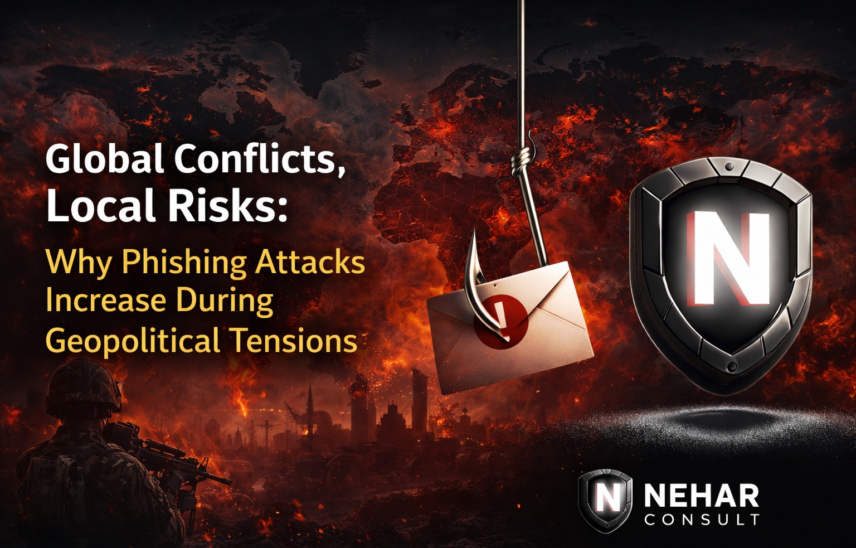
The modern battlefield has no borders.
In today’s interconnected world, geopolitical tensions are no longer confined to physical geography. They are almost always accompanied by coordinated cyber operations targeting governments, businesses, and—most importantly—individuals.
The Psychology of the Click
Cybercriminals and nation-state actors are masters of human psychology. They know that global conflict creates a volatile mix of fear, urgency, and curiosity. When we are anxious for news, we are more likely to bypass our internal “security filters.” Threat actors exploit this by crafting highly convincing lures related to:
The “Collateral Damage” Fallacy
Many business leaders assume cyber warfare only targets defense contractors or government agencies. In reality, private sector organizations are frequent collateral targets.
Industries like Financial Services, Energy, and Supply Chain are often targeted for espionage or disruption. Even if your company isn’t the primary goal, you may be a “stepping stone” into a larger ecosystem.
Why Technology Isn’t Enough
We’ve invested billions in endpoint protection and firewalls, yet over 90% of cyberattacks still start with a single email. Attackers aren’t “breaking in”; they are logging in. By targeting human behavior, they bypass the most sophisticated tech stacks. A single click can lead to:
Strategic Actions for Leadership
When global tensions rise, your defensive posture must evolve. Here is how to strengthen your “Human Firewall”:
The Bottom Line
Cybersecurity is no longer just an IT concern—it is a global risk management issue. As AI makes phishing attempts harder to spot, your people are either your greatest vulnerability or your strongest line of defense. At NEHAR Consult, we believe true security requires combining elite technical controls with a culture of continuous awareness.
The digital battlefield is active. Are your employees prepared?