


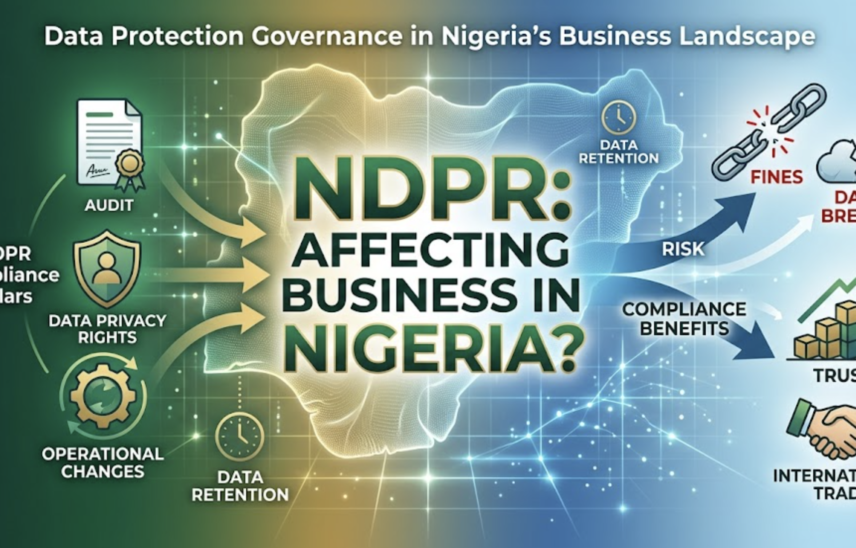
In today’s digital economy, data has become one of the most valuable assets an organization can hold. With that value, however, comes responsibility. In Nigeria, this responsibility is governed by the Nigeria Data Protection Regulation (NDPR), a legal framework established to protect personal data and ensure organizations manage it ethically and securely.
Issued in 2019 by the National Information Technology Development Agency (NITDA), the NDPR reflects Nigeria’s alignment with global data protection standards and mirrors international trends toward stronger privacy and data governance.
Understanding NDPR
At its foundation, the NDPR regulates how personal data is collected, processed, stored, and shared. Personal data covers any information that can identify an individual, including names, email addresses, phone numbers, financial details, device identifiers, IP addresses, and other related data points.
The scope of the regulation is broad. It applies to Nigerian businesses, startups expanding across Africa, and foreign organizations that process the personal data of Nigerian residents. In simple terms, if your organization handles personal data connected to Nigeria, NDPR applies.
What distinguishes NDPR is its emphasis on accountability. Compliance is not just about avoiding misuse of data; organizations must be able to prove that they protect personal information throughout its entire lifecycle.
Core Principles Businesses Must Follow
NDPR is built around several key principles that shape how organizations are expected to handle data.
Lawful processing comes first. Personal data can only be collected and used when there is a valid legal basis, such as explicit consent, contractual necessity, or a legal obligation.
Closely linked to this is transparency. Businesses must clearly explain what data they collect, why they collect it, and how it will be used. This information is typically communicated through a privacy policy that is easy to access and understand.
Data security is another critical requirement. Organizations are expected to implement appropriate technical and organizational safeguards to prevent unauthorized access, loss, or breaches. These safeguards may include encryption, access controls, secure configuration, and ongoing monitoring.
NDPR also grants individuals specific data subject rights. People have the right to access their personal data, request corrections, withdraw consent, and request deletion where appropriate.
Finally, organizations that process significant volumes of personal data are required to conduct annual data protection audits and submit reports to regulators—reinforcing continuous compliance rather than a one‑time effort.
How NDPR Impacts Businesses
NDPR is not merely a legal obligation; it has tangible operational, technical, and strategic implications.
From an operational perspective, businesses must understand how data moves through their systems. This often involves mapping data flows, identifying storage locations, and reviewing how data is shared with third parties. Staff awareness and training also become essential to reduce human‑related risks.
From a legal and regulatory standpoint, non‑compliance carries serious consequences. Penalties can reach up to 2% of annual gross revenue or ₦10 million for larger organizations. Beyond fines, enforcement actions can disrupt operations and erode investor and customer confidence.
On the technology front, NDPR encourages stronger cybersecurity practices. Organizations may need to enhance monitoring, improve incident response processes, and adopt recognized security frameworks such as ISO 27001 or NIST.
Perhaps most significantly, NDPR influences trust. Customers are increasingly conscious of how their data is handled. Businesses that demonstrate strong privacy and data protection practices gain credibility and competitive advantage, while those that fall short risk long‑term reputational damage.
A Practical Example
Consider an e‑commerce company operating in Nigeria. Each customer interaction—account registration, order placement, or payment processing—involves the handling of personal data.
Under NDPR, the company must obtain clear consent before collecting this information, protect it from unauthorized access, and respect customer requests to access or delete their data. In the event of a data breach, the organization is expected to act promptly, notify regulators where required, and inform affected individuals.
Steps Toward NDPR Compliance
Achieving NDPR compliance typically requires a structured and ongoing approach.
The process begins with a data inventory, helping the organization understand what data it collects and where it is stored. Privacy policies should then be created or updated to accurately reflect data practices.
Appropriate security controls must be implemented to protect sensitive information, and appointing a Data Protection Officer (DPO) can help drive accountability and oversight.
Regular audits are also essential. Beyond meeting regulatory requirements, audits help organizations identify gaps, reduce risk, and continuously improve their data protection posture.
Conclusion
The Nigeria Data Protection Regulation is more than a compliance requirement—it is a framework for building secure, responsible, and trustworthy businesses in a data‑driven economy.
Organizations that treat NDPR as a box‑ticking exercise expose themselves to legal, operational, and reputational risk. Those that integrate data protection into their core operations, however, benefit from stronger customer trust, better security, and greater long‑term resilience.
Ultimately, NDPR is not just about protecting data. It is about protecting people—and, in doing so, safeguarding the future of your business.
At Nehar Consult, we empower your employees with hands-on, real-world security awareness training that significantly reduces the risk and impact of identity theft—turning your people into a resilient, frontline human firewall, in a way that does not take them away from work. Beyond training, we work closely with your organization to navigate and complete the required cybersecurity frameworks, ensuring full CSAT fulfillment with clarity, confidence, and regulatory readiness.
Security Awareness Trainng Assessment Tool : Check your eligibility here
Schedule your next appointment here: Book your Appointment
Check how strong your password is with Free Nehar Password Check: Click here
Check what PCI DSS SAQ form is appropriate for your organization with our Free Calculator: Check here