


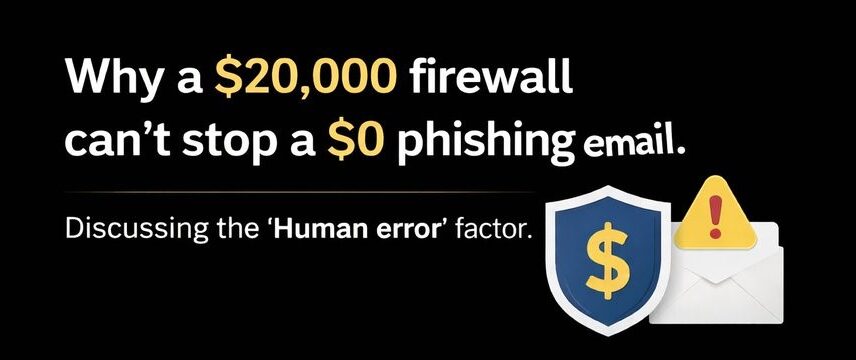
I have seen the increase in data-breach across the globe, even with global acceptance of GenAI usage – The two-edged sword tool, which is both available for the good use and bad cause. Also, I have seen many organizations invest heavily in firewalls, endpoint protection, and security tools—and rightly so. But despite these investments, phishing remains the most successful attack vector across Banks, SMEs, Government agencies, Oil and Gas, Schools, Hospital (health care) and NGOs across the globe.
Because technology does not fail first—people do.
A firewall can block malicious traffic. It cannot stop an employee from:
In Nigeria, and other part of African Countries the challenge is amplified by:
Pressure-driven work environments
High email and WhatsApp usage for business
Weak verification culture (“Just do it quickly”)
Limited or once-off security awareness training
Shared devices and accounts
The truth is this: Your people(employees) are either your strongest defense or your biggest vulnerability.
Until organizations treat staff as a Human Firewall—through continuous security awareness, simulated phishing, and clear reporting culture—even the most expensive security stack will keep failing.
Cybersecurity is not just an IT issue. It is a people issue, a culture issue, and a leadership issue.
If you’re securing systems but ignoring human behavior, you’re leaving the door wide open. The same opened door that could downgrade the effectiveness of the expensive tools you have relied solely on. We all can change or improve on our Security Culture from today.